


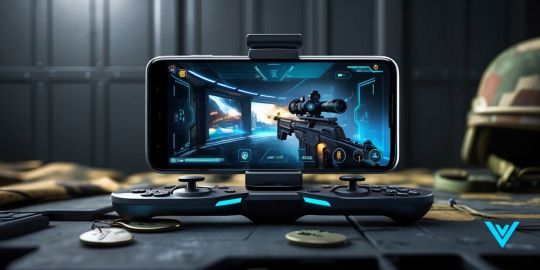
In the dynamic landscape of competitive mobile gaming, tactical shooters have evolved into a blend of precision, customization, and innovation. As players explore new frontiers with mobile adaptations of beloved franchises, questions about input methods arise. The integration of controller support in such games is examined closely, offering diverse experiences to both longtime console enthusiasts and touchscreen aficionados. Behind every decision lies a blend of technical optimization and design philosophy, where every toggle and mapping is tuned to elevate precision in high-stakes moments. This exploration unveils how these controls are implemented, how they compare to native touchscreen setups, and what complexities come into play when bridging two distinct gaming worlds.
Controller Integration and Mobile Design Philosophy
The integration of controllers in modern mobile tactical shooters stands as a testament to evolving design philosophies in game development. Rainbow Six Mobile, a flagship title in this arena, provides a window into this future by incorporating physical controllers during specific phases of gameplay. The support extends primarily to in-game combat, offering players a hardware alternative to digital control. While Ubisoft has ensured early support for controllers during the action-packed moments, users might notice that navigation through the menu screens still relies predominantly on touchscreen interaction. This selective integration highlights a careful balance between simplicity and performance, ensuring that the responsiveness required for quick decisions is maintained. The design has been finely tuned to provide a seamless overlay of controller mapping while preserving the rich, intuitive mobile interface built from the ground up.
Tailored Touchscreen Customization for Precision
Alongside physical controllers, the native touchscreen experience plays a crucial role in shaping gameplay. Developers have dedicated significant effort to developing fully customizable HUD layouts, sensitivity controls, and aim settings that are specifically designed to optimize touch-based interactions. This extensive level of personalization empowers gamers to adjust their gameplay experience interfaces to match individual playing styles and requirements. Enhanced personalization includes adjustable aim acceleration and sensitivity parameters, allowing each player to achieve optimal performance. Additionally, the inclusion of a gyroscope aiming option—supported by modern devices—enables a more immersive and physically engaging experience. This layer of customization ensures that even without external hardware, players have a competitive edge thanks to a finely tuned control scheme that reflects both sophistication and adaptability.
Mapping and Interface Adaptability in Competitive Play
In the competitive realm of mobile tactical shooters, control mapping represents more than a mere configuration; it is an extension of a player's skill and strategy. Rainbow Six Mobile encourages players to experiment with mapping configurations that best suit the rhythm of intense engagements. Players using physical controllers often enjoy the familiarity of analog sticks, which can influence both movement and orientation during critical engagements. Meanwhile, those favoring touchscreen displays find that a meticulously arranged HUD combined with context-sensitive action buttons can deliver nearly identical precision. Some advanced gaming phones even feature programmable button layouts that emulate controller triggers, further blurring the lines. This flexibility in mapping ensures that tactical decisions are not hindered by the input device, promoting an engaging experience regardless of whether the player opts for a controller or purely touchscreen-driven control.
Gameplay Dynamics and Competitive Edge
In an environment where milliseconds matter, every nuance of control contributes to the outcome of engagements. Rainbow Six Mobile’s design as a competitive tactical shooter emphasizes swift, precise input interactions. For many players, the physical feedback earned through controller use provides an inherent edge, particularly in managing rapid-fire sequences and nuanced directional changes. However, the emphasis on advanced touchscreen functionality underscores that the game itself was designed to reward players who master its digital interface. A blend of analog triggers for consistent action and customizable layout design supports competitive play across both input methods. This dual approach ensures that whether a player relies on tactile controls or refines a digital interface, they encounter challenges that test and ultimately elevate their gameplay strategies under intense, strategic conditions.
Functionality and Technical Optimization in Controller Support
The technical integration of controller support comes with challenges as well as enhancements that shape user experience. Ubisoft's implementation in Rainbow Six Mobile is mindful that controllers may experience varying levels of functionality, particularly over Bluetooth connections. Some users might encounter limitations such as unrefined button mapping, occasional input inconsistencies, or suboptimal controller layout responsiveness after firmware updates. Despite these challenges, the promise of a familiar console-like feel attracts players who might otherwise be hesitant about transitioning from touch to physical controls. By incorporating early controller support during intense in-game scenarios while maintaining the use of the touchscreen for navigational tasks, the game achieves a hybrid model. This approach leverages modern advancements in wireless connectivity and hardware optimization to minimize latency while providing a robust competitive framework that remains accessible to a diverse audience.
Balancing Physical Controls with Digital Precision
The steering design behind Rainbow Six Mobile reflects a careful balancing act between robust controller integration and refined touchscreen precision. As technical challenges persist—such as potential issues with input lag or inconsistent performance—game developers continue to refine algorithms designed to equalize the playing field. Controller users may experience the benefit of physical triggers and analog navigation that feel familiar and intuitive, replicating the sensation of console gameplay. Yet, the native touchscreen is equally celebrated for its advanced customization capabilities that allow players to fine-tune every element from sensitivity to layout dynamics. This balance is critical in regulating competitive fairness, as each input method has its distinct advantages. Whether through physical hardware or through a digitally calibrated interface, the aim remains to foster an environment where tactical expertise translates seamlessly into on-screen success.
Overcoming Synchronization and Compatibility Hurdles
While the introduction of external controllers in mobile gaming represents a significant evolution, certain technical nuances cannot be overlooked. Synchronization remains a core issue, especially when integrating devices from various manufacturers. Players might sometimes confront challenges like minor input lag or altered button configurations immediately following game updates. These obstacles can create abrupt shifts in a player's expected performance, highlighting the need for constant updates and patches. Ubisoft has been proactive in addressing these incidents, yet the risk of inconsistent performance due to third-party compatibility issues persists. Developers encourage players to remain adaptive and to explore customizable input settings that can mitigate some of the irregularities. This ongoing process of troubleshooting unique input scenarios is emblematic of the broader evolution in mobile gaming hardware integration.
Evolving Control Schemes in Tactical Mobile Environments
In the intricate world of tactical mobile shooters, control schemes continue to evolve through iterative design and community feedback. The early introduction of controller support in Rainbow Six Mobile illustrates a broader trend of blending traditional gaming experiences with modern mobile requirements. By offering customizable options for both touchscreen and physical controller input, the game creates an inclusive environment that appeals to various player demographics. This evolutionary approach is visible in the device-optimized user interfaces that empower players to refine every aspect of their gameplay, from rapid response mechanics to detailed mapping configurations. Over time, emerging technologies such as advanced gyroscope sensors and haptic feedback mechanisms are expected to further refine the control schemes, ensuring that gameplay remains both competitive and deeply immersive for players who thrive on precision and tactical depth.
Visual and Aesthetic Considerations in Mobile Gaming
Beyond functionality, the aesthetic presentation of input methods in Rainbow Six Mobile plays a significant role in user experience. The visual interface is crafted with clarity in mind, featuring crisp icons and context-sensitive buttons that dynamically adjust to the player's touch or controller inputs. The visual feedback includes subtle animations that confirm a button press or a successful command, contributing to a satisfying and responsive gaming session. Themes and HUD dynamics are fully configurable, allowing players to create a visual environment that supports and enhances their unique playing style. The unity between visually appealing interfaces and mechanical precision provides a holistic platform where gameplay, design, and input mechanics interact harmoniously. As such, even the physical act of engaging with a controller becomes an extension of the game’s carefully calibrated aesthetic.
Performance Tuning and Adjustable Sensitivity Settings
Performance tuning is intrinsic to mastering a competitive mobile shooter, and Rainbow Six Mobile’s adjustable sensitivity settings are at the forefront of this experience. Players are afforded the ability to fine-tune tactical parameters, ensuring that every swipe, tap, or button press is optimized for responsiveness. This deep level of control customization extends to both the touchscreen and controller inputs, thereby removing barriers to competitive performance. Through iterative experimentation with sensitivity curves and acceleration settings, users can create a personalized configuration that significantly impacts aiming precision during rapid encounters. Crucial to this is the built-in gyroscope aiming support found on compatible devices, which augments the traditional digital input with a physical element through device tilt. Such innovations transcend mere control adjustments, evolving into a comprehensive system that boosts the proficiency of every tactical maneuver.
Input Harmony Across Diverse Platforms
One of the most compelling aspects of Rainbow Six Mobile lies in its endeavor to harmonize input methods across diverse gaming platforms. As competitive mobile titles increasingly operate in cross-input environments, ensuring fairness and balance becomes paramount. Controller players, with their tangible inputs and familiar command layouts, might initially appear to have an advantage over those solely relying on touchscreen controls. However, the careful design of independent matchmaking systems and a distinctive emphasis on interface customization serve to level the playing field. The array of settings—from customizable HUD arrangements to finely tuned sensitivity options—ensures that every input method can be optimized to reach high levels of performance. Such harmonious integration demonstrates the advanced design and thoughtful planning that guides every aspect of this dynamic mobile shooter.